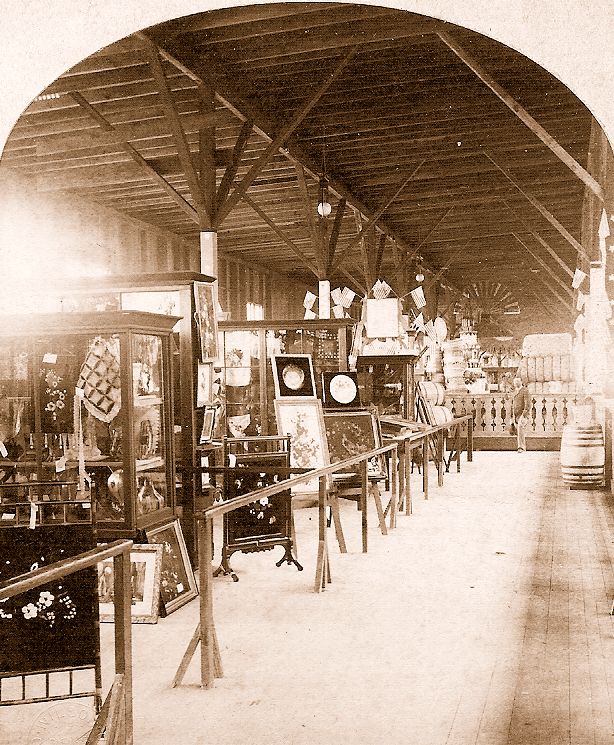
About This Beautiful Sisterhood
This Beautiful Sisterhood of Books is a digital humanities recovery project that recreates the Woman’s Literary Department from the New Orleans 1884 World’s Fair and “recovers the exclusion” of Black women and their work from the Woman’s Department exhibit. The Beautiful Sisterhood Project is for scholars, educators, students, and members of the public who wish to explore, build, and help interpret our collections. The site offers a digital archive, a curriculum for undergraduate students, and exhibits on topics relating to the 1884 Woman’s Department. The Beautiful Sisterhood Project is committed to publishing new research by scholars at all levels, inside and outside of the academy.
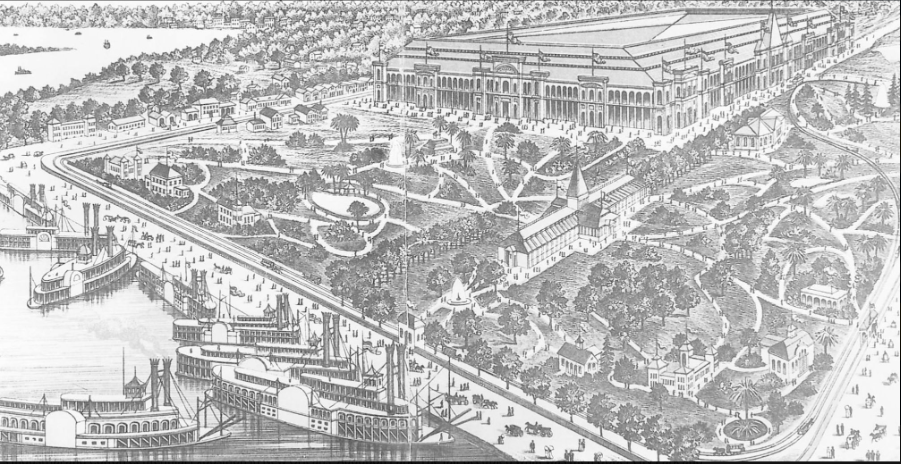
The 1884 New Orleans Exposition was the first world’s fair to formally invite, fund, and house an exhibition exclusively for women. Scholars have largely disregarded the significance of the 1884 Woman’s Department, often emphasizing the contributions of the 1893 Woman’s Building library at the Chicago Columbian Exposition for showcasing the first display of literature by women. Yet, almost a decade prior, Maude Howe, the daughter of the Women’s Department President, Julia Ward Howe, came to New Orleans to organize a woman’s book exhibit.
The Colored Department stood next to the Women’s Department on the mezzanine, separated from the exhibits on the main floor. The Colored Ladies Exposition Association sought to join forces with their white counterparts in the Woman’s Department, meeting with Julia Ward Howe. Although Howe expressed a willingness to help, it seems that she never did. The 1884 Woman’s Department’s melding of Woman with whiteness linked up with its post-Reconstruction southern location. Notably, however, eight years later, the Columbian Exposition’s Woman’s Building (Chicago) made its Jim Crow policy far more explicit, despite a widely publicized protest led by Frances E.W. Harper, Ida B. Wells, and Frannie Barrier Williams. For more information, see Miki Pfeffer, Southern Ladies and Suffragists.
There is no easy remedy, in our work as recovery scholars, for Julia Ward Howe’s failure to include Black women in the 1884 Woman’s Department without reification or further erasure. With this racialized and gendered history in mind, we have reconstructed the original collection as a searchable database and built exhibits featuring “Black Women and the Fair.” We are currently working to integrate the works found in the “Black Women and the Fair” exhibit into the site’s database of the original collection, like their white counterparts, while also displaying a recovery icon that helps viewers recognize that they were not always included. We especially want to illustrate the range of works produced by Black women writers during this period, but without erasing the racialized culture in which they lived and worked.
Our recovery project remains a work in progress. Contact us about your ideas. We welcome your contributions!
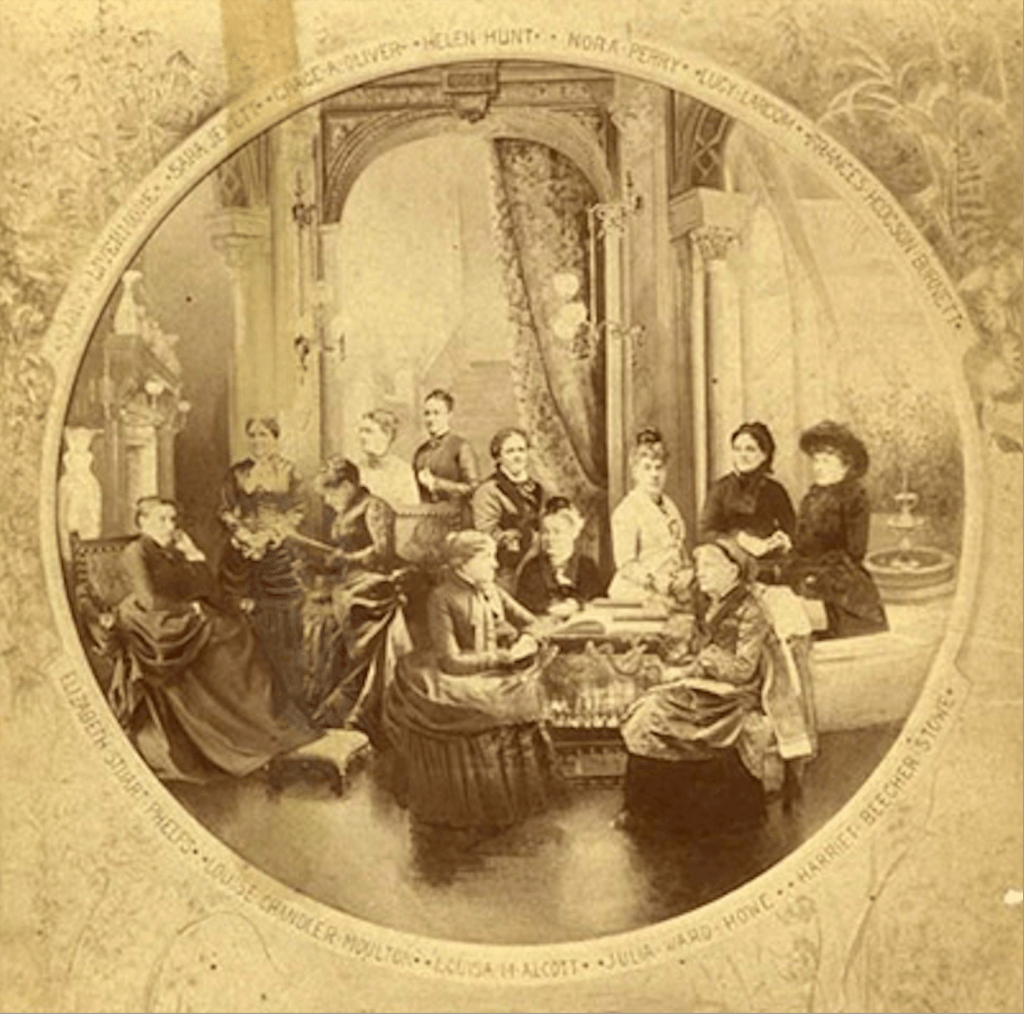
“Eminent Women 1884” by Eugene L’Africain. Read about the Composite Photograph.
This composite photograph hung over Maud Howe’s desk in the Woman’s Literary Department at the 1884 New Orleans World’s Fair. To create it, Canadian artist Eugene L’Africain photographed the twelve women separately, assembled their images together on a painted background, then photographed the resulting collage. It depicts famous authors of the day, including Nora Perry, Mary A. Livermore, Sara Orne Jewett, Grace A. Oliver, Helen Hunt Jackson, Lucy Larcom, Frances Hodgson Burnett, Elizabeth Stuart Phelps, Louise Chandler Moulton, Louisa May Alcott, Harriet Beecher Stowe, and (Maud’s famous mother) Julia Ward Howe